
Duck Coops and Runs: How to Plan, Design, and Build Them
Tyrant Farms' articles are created by real people with real experience. Our articles are free and supported by readers like you, which is why there are ads on our site. Please consider buying (or gifting) our books about raising ducks and raising geese. Also, when you buy through links on our site, we may earn an affiliate commission. Learn more
Your duck coop and duck run are the first and most important lines of defense against predators. In this article, you’ll find out everything you need to know to build a long-lasting, predator-proof duck coop and run.
First, some definitions so things are crystal clear:
- A duck coop is the structure your ducks sleep in at night.
- A duck run (aka pen) is a separate enclosure where ducks can be kept during the day.
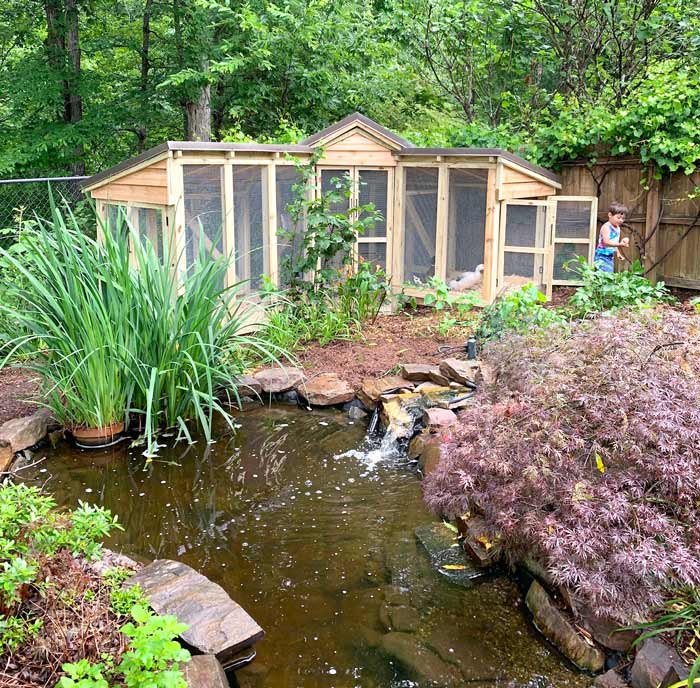
You don’t necessarily have to have a duck run, but you do have to have a duck coop. Also, your coop can be situated inside your run.
Note: Once you’re done with this article, come on over to see a video tour, design tips, and step-by-step construction photos of the Waddle Inn duck coop!
Predators will try to kill your ducks no matter where you live.
It bears repeating: the single most important thing you can do to provide for your ducks’ safety and wellbeing is build them a predator-proof duck coop and duck run (or other fortified daytime area). Based on our personal experience, it seems like every predator within a five mile radius has tried to break into our duck coop. And we’ve received countless messages from new duck owners who lost their ducks to predators due to insufficient preparation.
Knock on wood, we’ve never had a single duck killed or injured by a predator because we planned ahead and stay ahead. We also want you to plan ahead by building a predator-proof living environment BEFORE you get ducks.
Below, you’ll find out how to build a long-lasting, predator-proof duck coop and run.
Step 1: Answer these key questions:

Before you break out the hammer and saw, you’ve got to do some pre-planning. That’s because there’s no single way to build a duck coop.
Our goal in this article is to help you build a duck coop that’s perfectly suited to your circumstances; it’s NOT to tell you how to build our duck coop (which is right for us but not necessarily for you.)
Here are some key questions you need to ask and answer that will influence your final duck coop design:
1. How many ducks do you have or plan to have, AND what breed(s) of duck?
The general rule is 2-6 square feet of space per duck inside their coop, with some variance based on breed size. For instance, you could get away with 2-3′ per duck for Welsh Harlequins or Runners, but that would be too small for larger breeds like Pekins or Silver Appleyards who’d be happier at 5-6’ square feet of space per duck.
When in doubt, err on the side of providing more space! Your ducks will be happier, and it’s a better problem to have too large a coop than too small a coop, especially if there’s a chance you’ll be getting more ducks in the future.
Also, if you have to have a larger coop due to the number of ducks you have, you’ll almost certainly want to have a taller coop as well. That way, you can easily walk inside to clean, collect eggs, etc, without having to crawl through duck muck on your hands and knees.
2. Do you have male and female ducks?
If you have male and female ducks, we highly recommend you do one of the following for your drakes:
a) build them a separate coop; or
b) build them a partitioned area inside your coop to keep them physically separated from your females.
If not, your females may become stressed or sustain leg and head injuries due to your drake mating them throughout the night on the ground. Years back, we found this out the hard way with our first flock and thus ended up making a separate duck coop for our drake. Today, our single large coop (Waddle Inn) has three internal partitions allowing us to separate our drakes as- and when-needed.
If you end up with multiple drakes along with your females, the drakes will most certainly spend spring through summer trying to kill each other, so you’d need separate partitions for them inside the drake coop for much of the year.
Drakes’ general sexual aggressiveness is why we recommend new duck parents start with an all-female flock (if they want eggs) or an all-male flock (if they simply want pets but no eggs). Without females around to arouse their sense of sexual competition, drakes will actually get along quite well together.
3. What’s your climate?
A duck coop in Maine is going to need some different features than a duck coop in Florida. For instance:
- A hot climate coop will be designed for maximum ventilation to keep the ducks cool at night.
- A cold climate coop will need to have its otherwise ventilated windows and doors covered during winter storms and/or sustained temperatures below 20ºF (-6.7ºC).
- A cold climate coop needs to be on the upper end of the 6 square feet per duck range (or higher) since your flock may be unable to come outside for days at a time during heavy snowstorms. This will make being cooped up (literally) more tolerable.
- You may also want your extreme climate coop to be moveable so it can be placed in a sunny spot in the winter or a shady spot in the summer.
4. Do you have a lot of large predators around?
Bears are harder to defend against than raccoons. If you live in an area where bears are common, you’ll need to plan to have an extremely sturdy/structurally reinforced duck coop that’s anchored to the ground.
For instance, setting your coop’s framing posts into concrete is a good way to make sure a bear can’t tip it over. Since bear claws and teeth can make quick work of mesh wire, you’d also want your coop to be built more like a human house with solid walls and small wire mesh windows for ventilation. Having entire walls, doors, or large windows made of wire mesh might be all a bear needs to rip through and gain access.
We live in a hot, humid southern climate where bears are relatively rare. Therefore, our coop has entire walls made of wire mesh to help keep our flock cooler on summer nights. Our winters don’t get nearly cold enough to bother our ducks.
5. Are there any large trees overhead?
Tree branches die and fall off. Trees and their branches also fall during storms. Placing your duck coop or run under a tree is a recipe for dead or injured ducks or a destroyed coop or run.
6. Is the coop in a fenced in backyard or out in the open?
Our coop is in our back yard which has a 6’ tall fence. Thus, our large back yard serves as our ducks’ run during the day. We let our ducks out in the morning when the sun is fully up and put them away at night before it’s fully dark. That’s because most duck predators are nocturnal. We also work from home and can respond to any alarmed duck noises immediately.
If you don’t have a fenced in backyard with other measures in place to protect your ducks against predators, you’re going to need to construct a covered run/pen that’s attached to or surrounding your duck coop.
Keeping your ducks in a protected run by day is the only 100% certain way to keep them from being killed or injured by predators.
7. Where will your ducks’ pool be, how big is it, and how will you drain/fill it?
If you have ducks, you’ll need a duck pool for them to swim, clean, and play in. There’s no hard and fast rule on how big your duck pool needs to be, but the bigger and deeper (at least up to a few feet deep) the better.
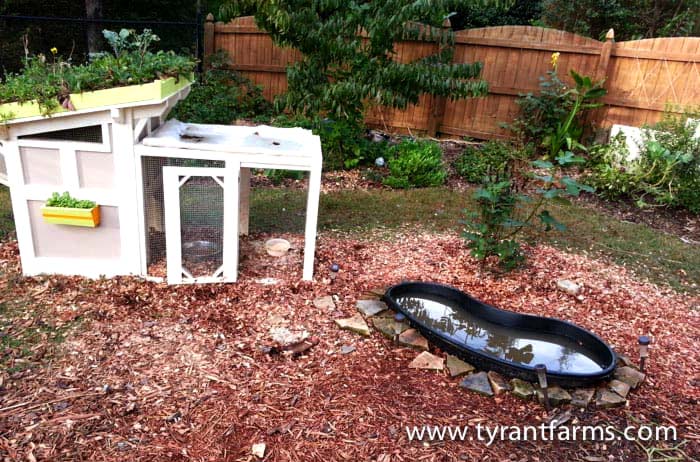
Our ducks probably spend 4-6 hours per day in their pool in the summer and 3-4 hours per day in the winter. At least once per day, they’ll go into a frenzied play mode where they start diving and swimming underwater, something they couldn’t do in a kiddie pool.
You don’t have to build an electric powered, self-cleaning duck pond like we have. Especially for a 3-4 bird flock, a smaller plastic pool will do, but you’ll need to consider where you plan to place the pool in the run because:
a) you’ll have to drain or dump the water at least once every 2 days, and
b) you’ll have to be able to easily refill it.
This might not sound like a lot of work or a sanitation issue from the outside, but after a couple of months of dumping your duck pond in the same spot, you might be a bit shocked by how much muck this process can create, not to mention noticing a little stiffness in your back. It also means you’ll need to locate your pond:
a) away from your duck coop (you don’t want the area to be wet and cause wood rot); and
b) in a spot that makes it easy to drain or dump OUT of your duck pen to prevent the area from getting too squalid and creating ideal habitat for parasites and pathogenic microbes.

8. Where do you want the duck coop to be located in your yard?
This can be a surprisingly hard question to answer! There are climate factors to consider (see above). There is also topography to consider. If at all possible, we recommend putting your coop and run on higher ground in a well-draining spot that gets plenty of sunlight.
We’d also recommend putting your coop in a spot that you can easily see from a window inside your home. Ideally, the spot can also be illuminated at night as-needed with the flip of a light switch from INSIDE your home. This way, you can easily see what’s happening if your ducks are especially upset about something late at night without you having to run outside in freezing weather in your skivvies after fumbling to find a flashlight. (We might be speaking from experience here.)
9. Do you want/need electrical power and/or lighting in or around the coop?
We’ve heard many horror stories of well-intentioned people putting heaters or brooder lamps in their chicken or duck coops only to have their coops burn down with the animals inside.
Ducks are very cold-hardy creatures. An extra heat source isn’t necessary even in cold climates so long as they have a thick layer of dry bedding inside a coop that’s sheltered from wind and storms.
By artificially heating your duck coop, you may actually end up harming your ducks. A temperature differential of 30 degrees or so between where they sleep and where they spend their day can make it difficult for their bodies to acclimate to the cold, causing them to get too cold or develop respiratory problems.
However, you may still want power to run to your duck coop so you can turn on a light, have a heated water bowl (for cold climates), run power tools, etc. With lighting, keep in mind that a bulb placed even 6’ from a duck will provide it extra stimulation to lay eggs during times of year when it may be better for them to take time off from laying for health reasons. So turn any overhead lights off at night to help your ducks stay in tune with sunlight and their natural, seasonal cycles.
Since our duck coop is fairly close to an electric outlet on our back porch, we run a heavy duty extension cord to a box fan on really hot summer nights to help our ducks stay comfortable. That’s cheaper and easier than running permanent electric lines to our duck coop, but your situation may be different.
For liability’s sake, we should state here that any electrical work done on your duck coop should be undertaken by a licensed and insured electrician, not your cousin’s friend.
Step 2: Follow these duck coop planning rules:
How many square feet per duck should a duck coop be?
Build your coop for 2-6 square feet of space per duck inside their coop, with some variance based on breed size. Also consider that you’re very likely to get more ducks (after all, ducks are a gateway drug to more ducks), so starting with a larger coop gives you room to expand your flock.
How big should a duck run be?
The optimal amount of space for a duck run is *125 square feet per duck. This gives them plenty of room to move around and allows room for other essentials like a duck pool.
*250 square feet for a run for two ducks (you should always have at least two ducks) is based on a recommendation by Kimberly Link in The Ultimate Pet Duck Guidebook. We agree with her assessment and are echoing it here.
What should my duck coop and run framing materials be made of?
We highly recommend you build your duck coop and run out of treated lumber or rot-resistant wood like cedar or black locust. Treated lumber is no longer made with toxic substances like it used to be; it’s now infused with micronized copper.
Using treated or rot-resistant lumber will drastically slow wood rot and make your duck coop and run safer from predators for longer. It will also keep you from having to replace rotting wood every few years.
To save money on cedar or black locust, call around to lumber yards in your area to check prices and availability. Neither type of lumber is typically carried at home improvement stores like Lowes or Home Depot – they typically have to special order it and the price markup is significant.
Another possible money saving tip: you might be able to use “cull wood” to frame a smaller coop. Cull wood is the scrap pieces cut from other larger pieces that is sold at up to 70% discount at Lowes, Home Depot, or similar stores.
Do I need to cover my duck run?
If you want to make your duck run 100% predator-proof (which we recommend), then you’ll need to make the roof of your duck run impenetrable to predators. That means it will need to be framed out with wood and covered with ¼” – ½” wire mesh as well.
Since ½” wire mesh will cost less than ¼”, know that it’s a perfectly safe alternative since you’re not worried about the small arms of a raccoon reaching all the way down to the ground to grab a duck from this height. ½” inch is also too small for a snake to squeeze through.
Covering your duck run also makes it easier to put up shade cloth or other sun protection in really hot, sunny environments.
How do I keep things from digging under and into my duck run?
Just as with your duck coop, predators and rodents will try to dig under and into your duck run. It’s not practical to lay wire mesh under a large area like a run, so what to do? Install a wire mesh predator skirt around the perimeter walls of your run.
How do you protect openings like windows?
Use ½” or smaller galvanized wire mesh on any openings in your duck coop. Anything larger than ½” and raccoons can potentially reach in and grab your ducks.
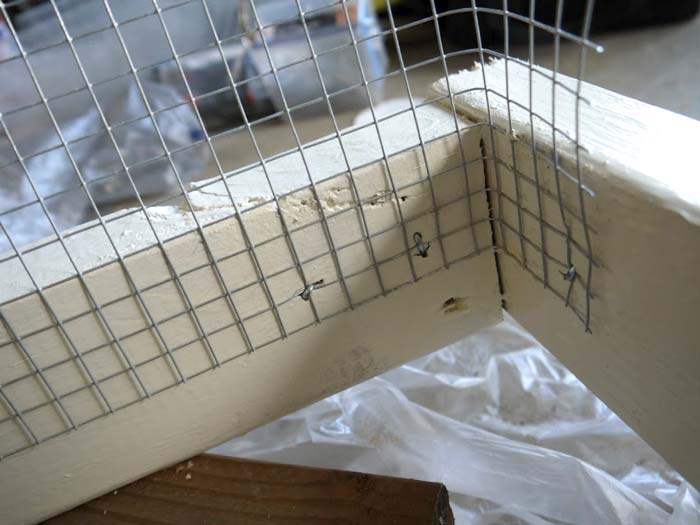
Also, window and door gaps should be no larger than about 1/3” to prevent snakes or rodents from squeezing through. The tighter the better.
What type of door latch should be used for duck coops?
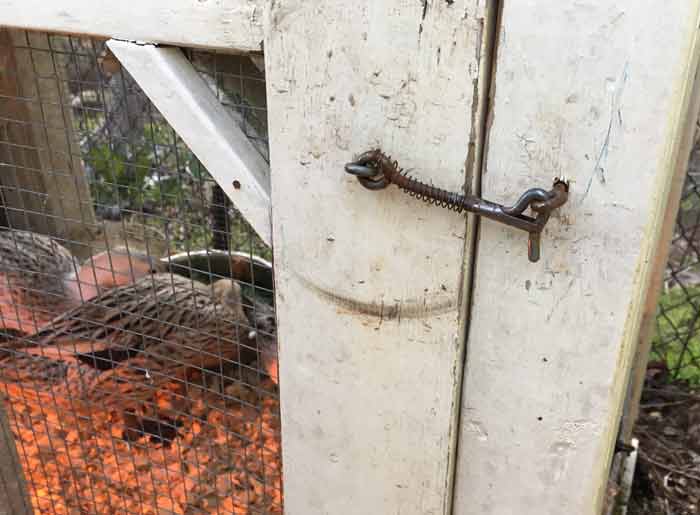
Do NOT use simple latches that slide up to open in a single sweeping motion, since raccoons can figure out how to open them. Instead, use safety latch eye and hook locks instead, which require human hands to open.
Do ducks need a perch like chickens?
Unless you have Muscovies, you do not need a perch in your duck coop. Muscovy ducks perch. Mallard-derived duck breeds do NOT need a perch and instead stay on the ground in their coop. The only thing those clumsy duck flippers are meant to grab is water.
Do ducks need nesting boxes like chickens?
No, ducks don’t need their own nesting boxes. If you’re housing multiple laying ducks in a single coop, they’ll typically create a single communal nest, right on the floor. They’re also prone to hiding or covering the eggs with their bedding, so you may get to enjoy an egg hunt each morning!
Search tip: The nest is usually in the same place each day, but when your ducks are just starting to lay, you might not notice their hidden eggs.
Should a duck coop have a ramp entryway?
Duck coops should not have a ramp entry, especially not in climates where icy weather is common. Ducks are very clumsy walkers and a ramp is an accident/injury waiting to happen, especially for older ducks or larger flocks where they stampede when let out in the morning.
Build your coop as close to ground level as possible so your ducks can walk right in or out rather than having to climb up or down a ramp.
What should a duck coop floor be made out of?
There isn’t a single right answer to this question, but here are the factors you need to plan/design for:
- Rodents will tunnel under and into your duck coop if there’s nothing stopping them.
- Predators will dig under and into your duck coop if there’s nothing stopping them.
- Duck flipper pads are prone to injury and infection if they’re directly on hard surfaces (like concrete) or rough surfaces (like wire) for an extended period of time.
So, a couple flooring options for duck coops based on the information above:
Option 1. Concrete floor (or other type of solid floor like the wood base in a pre-made shed) with a layer of bedding on top to protect duck feet. We prefer large flake pine shavings. Kimberly Link, another duck expert we highly respect, prefers straw (NOT hay), which is hollow inside (unlike hay) and therefore doesn’t breed Aspergillus. Aspergillus is a fungus which can kill immunocompromised ducks.
If you have a solid floor, spilled water and wet duck poop buildup can become a problem, so cleaning out the duck bedding will need to be done more frequently (probably at least twice per month in the summer and once per month in the winter).
Option 2. 1/4” – 1/2″ wire mesh laid flush under the duck coop. This can either be stapled to the base of the coop or extend out 1′ beyond the perimeter walls, creating a predator skirt. Bedding is laid on top of the wire mesh 3+ inches thick to protect duck feet. This is the method we use in our duck house floors.
The mesh floor keeps rodents from tunneling in. Larger predators will often try to dig under and into a duck coop. When they dig and hit the wire mesh predator skirt, they’re stopped in their tracks.
What type of ventilation does a duck coop need?
Having a well-ventilated duck coop is critically important to your ducks’ health since ammonia fumes from nitrogen in their waste can build up to unhealthy levels inside an air-tight coop. At the same time, if you’re in an extremely cold climate, you don’t want a duck coop with wire mesh walls and open windows like we have.
Since we live in a moderate climate that’s ideal for ducks year round, our duck coop design mirrors the conditions our environment affords us: we have wire mesh doors and sides around most of our coop, which maximizes air flow. Even on our coldest winter nights when temps dip into the teens or even single digits, our ducks are unscathed.
A few clusters of ¼” drilled holes (too small for predators and mice) located on the top of all four sides of your duck coop will provide adequate ventilation for cold, northern climates without letting too much wintery chill and precipitation in.
Do you need to provide food and water at night in your duck coop?
Many people don’t provide food or water for their ducks at night so as to reduce messiness and not attract rodents. However, we provide food, water (with leafy greens and peas in the bowls), and oyster shell inside our duck coops at night. Why?
Our ducks are in their coop for at least 12 hours every night. Many of them are laying eggs. Sometimes, they’re molting, which is also energetically/nutritionally taxing. Our ducks could possibly be fine for that long without food and water but they wouldn’t be happy. Plus, we want them to have the extra nutrition during that time window, especially if they’re laying eggs.
There’s zero chance of rodents getting into our coop — even the bottom is wired tight and we lock the coop up after we let our ducks out in the morning so nothing can get in during the day either. Any spilled water and mess in the coop bedding is actually a benefit in our modified deep litter system since it speeds up decomposition of the litter. (More on deep litter method below.)
Does this mean you have to do what we do or that our way is the one and only right way? No. Our approach may not be ideal for all circumstances, setups, and environments.
Step 3: Design and build your duck coop.
Now that you’ve answered the questions in Step 1 and taken the duck coop rules from Step 2 into consideration, it’s time to design and build! You don’t have to have a fancy design or use any software, you can simply sketch out the details on a notepad.

As you now know from reading the information above, there’s no single way to build a duck coop, just as there’s no single way to build a house for humans. However, by knowing the basic rules and safety risks while taking your unique situation into consideration, you can build the perfect duck coop and run for your feathered family members.
Since your duck coop and run are guaranteed to be tested by predators for as long as you have ducks, please plan and invest accordingly. A vet bill can cost more than an entire duck coop, and you can’t pay to fix a broken heart.
We suggest you google “duck coop designs” for additional inspiration before designing and building your coop. If you’d like to see our coop designs, they can be found on our website as follows:
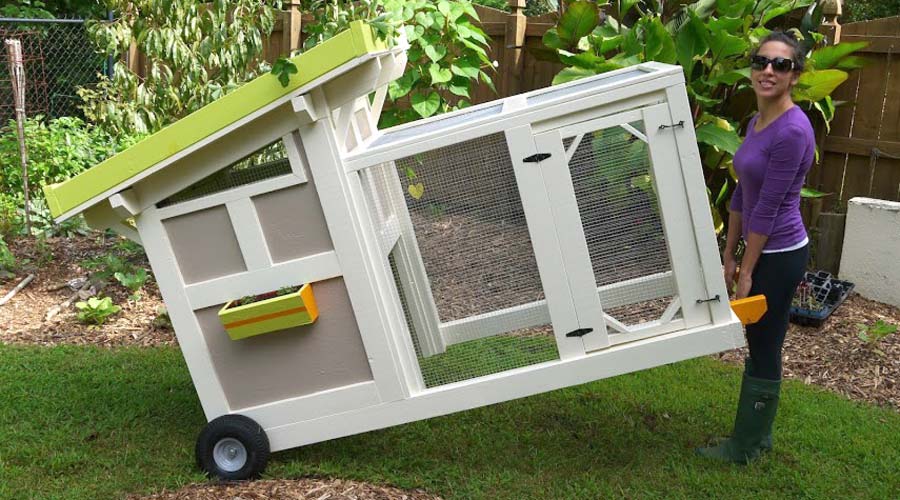
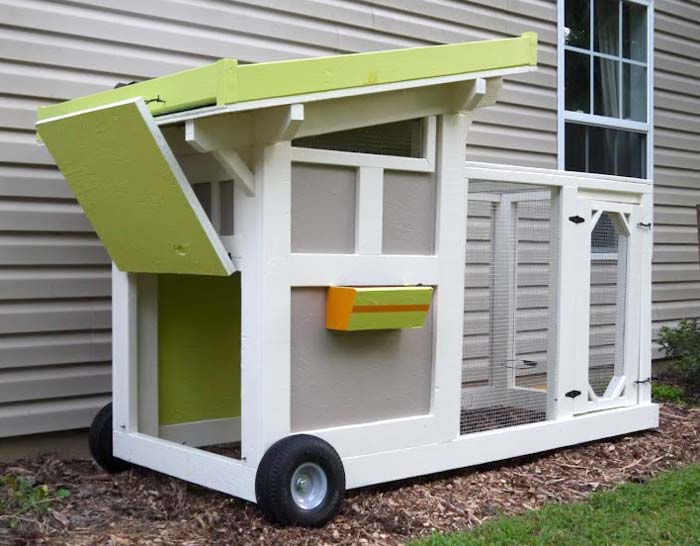
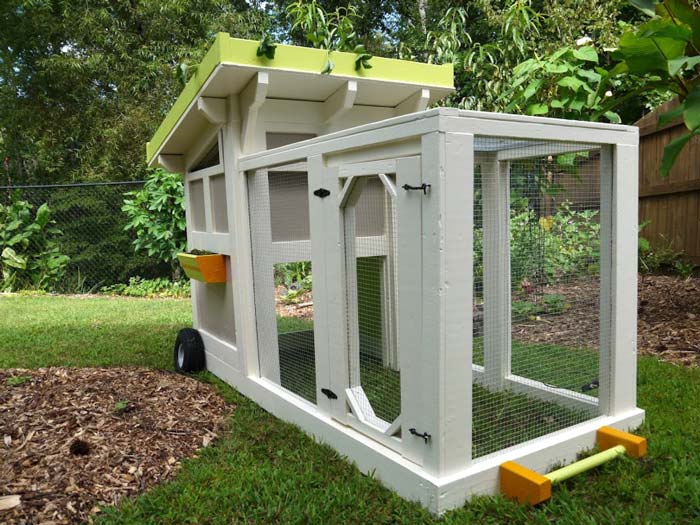
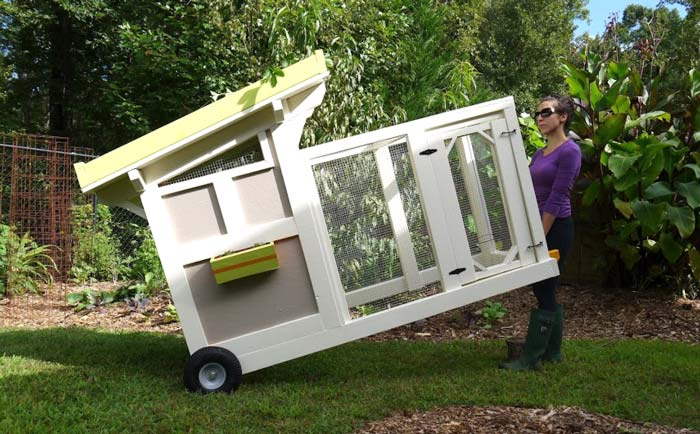
- *”Quacker box” for our smaller moveable duck coop tractor design that can accommodate up to 6 small to mid-sized ducks (https://www.tyrantfarms.com/introducing-the-quaker-box-a-birthday-present-worthy-of-the-tyrant/); and
- “Waddle Inn” for our large, anchored corner coop design (with internal partitions) that can hold 15-20 ducks (https://www.tyrantfarms.com/duck-coop-tour-design-ideas/).
*Note: Yes, there is a typo in the url of our Quacker Box article (“quaker”). The coop is meant for ducks, not Quakers.

KIGI,


Get quacking on other great duck articles:
- Waddle Inn duck coop video tour, design, and construction photos
- 17 tips to keep your ducks safe from predators
- How to build a self-cleaning duck pond
- How to choose the best duck breeds for you (with breed rankings)
- How to hatch duck eggs: complete guide
- What to feed pet or backyard ducks to maximize their health and longevity
… and more helpful duck articles from Tyrant Farms.







Greetings: Thank you for your article; very helpful! You mention “The optimal amount of space for a duck run is 125’ ” per duck. Is that Square Feet? If not, how are you calculating that number?
Thank you
Ed
Sorry, Ed. That sentence wasn’t terribly clear. I’ve updated that section as follows:
“The optimal amount of space for a duck run/pen is *125 square feet per duck. This gives them plenty of room to move around and allows room for other essentials like a duck pool, better sanitation, higher quality of life, room to separate ducks if necessary, etc.
*250 square feet for a run for two ducks (you should always have at least two ducks) is based on a recommendation by Kimberly Link in The Ultimate Pet Duck Guidebook. We agree with her assessment and are echoing it here.
However, this spacing is for people who consider their ducks pets and want them to have the highest quality of life possible. Production-oriented duck keepers or small farms will opt for much smaller spaces for their ducks, since ROI (return on investment) is a primary focus and culling sick, injured, or non-laying ducks is standard.”
Hi, appreciate you guys creating this article. I’m currently in the process of trying to design a coop and runner for the first ducks I’ve ever raised and have been struggling with what to do for the flooring to manage the poop situation! To me, the easiest to manage solution would have been to use vinyl coated hardware cloth and have at least most of the poop fall through the wire and hose off the rest every day or two but I’ve been concerned about if this would cause any issues for the ducks feet and it sounds like per your article you believe it would? Or is that more just the bare metal wire? I was thinking a vinyl coated wire would be ok especially since they will only be in this during the night time hours. What do you guys think? If i do end up putting straw in it i would think it would start getting nasty in just a matter of a couple days… what is your experience with that and what is your maintenance routine for keeping it clean? Thanks!
Hi Ryan! 1/4″ vinyl covered mesh wire flooring might not cause scrapes and cuts on your ducks’ feet, but I’d be concerned about their toes getting caught and injured in the small openings. Any larger than 1/4″ and you also risk leg injuries plus critters being able to get in to your coop (snakes, mice, etc – plus raccoon hands). Secondly, if you spray the duck poo through the floor of their coop, the area under the raised coop would get quite foul very quickly so you’d be back in the same boat.
While many people like and use straw in their duck coops, we prefer (and recommend) large flake pine shavings as we detail here: /whats-the-best-bedding-for-your-duck-coop-or-run/. We use a modified deep litter method wherein the duck coop bedding gets composted and the compost is used in our gardens (or we use the un-composted spent bedding around perennial fruit and nut trees). Each night, we do a quick top-up of the coop with pine shavings (basically just a thin layer of new shavings over the poo spots). Repeat until the bedding is about 15-20″ deep, then remove all the bedding with a pitchfork, put it in compost or around trees, and start the process over. It usually takes 3-4 months between cleaning out the coops, and there’s no discernible bad odor along the way.
Hope this info helps and let us know if you have any other questions.
Hi Aaron, thanks for getting back to me so soon and for the additional information. I live in the city and really had no business getting ducks anyway but… I did. I thought i had good solutions for everything i needed but apparently not so much when it comes to the floor/bedding for the coop and runner. I’m currently only working on the runner and was hoping to use vinyl coated wire for the floor and then have a poop tray underneath that i could slide out to hose off and clean. Thanks again for the info it was very helpful.
One thing to keep in mind is that your setup can be dynamic. You’ll learn a ton once you get ducks. Just because something isn’t perfect the first time or doesn’t work exactly as planned doesn’t mean you can’t iterate and make improvements/changes. Obviously, you need to cover the essentials like having a predator-proof setup, but there are lots of ways to accomplish that aim. We’ve done countless modifications and iterations since our Day 1 duck setup about a decade ago.
I’m starting to come to the conclusion that there is no solution to accomplish what i was wanting to accomplish. =) The goal was to make a predator proof runner that was easy to clean (i.e. essentially just spraying off with a hose) and that did not require any type of bedding. I thought i had it solved with the vinyl coated hardware cloth and then a galvanized steel tray that i could just hose the hardware cloth then pull out the tray to dump all the contents down a drain i have in my yard. The ducks will only be in it during the hours that it is dark outside. The only issue I’m concerned about is if it would cause any issues with their feet and legs. If not, then i think I have about the best solution but i don’t know whether to try it or not…
Anything larger than 1/4″ wire mesh is going to make the coop accessible to certain types of predators. However, that size is not going to be conducive to spraying water if there’s bedding inside since the bedding will get wet, moldy, and unhygienic and won’t be small enough to wash through the openings. You do need bedding to keep your ducks comfortable, allow them to make nests, and protect their feet. Even if the wire is covered in vinyl to protect from abrasions/bumblefoot, their toes or nails can easily get snagged and injured in the wire, so it’s not worth the risk. Do a bit of reading about various deep litter methods, which really aren’t a lot of work. Just a couple minutes each time you put them up for top-ups and a full clean-out every few months or so.
Love the education about ducks! Thank you. Can I buy the plans for the portable duck coop please?
Appreciate that, thanks Jeff! Unfortunately, we never did a full CAD mockup of our Quacker Box duck coop so we don’t have plans. Best we can offer is the pictures on our website.
Hi- I’ve read your article about feeding ducks maintenance instead of layer feed, but when I can’t find any! I’ve looked online, asked at my feed store, checked Tractor Supply – it seems that everyone is pushing higher, rather than lower, protein content. On Chewy.com there was some but the cost is prohibitive. Do you have a brand or source of Maintenance feed you recommend? Thank you.
Hi Ann! Sorry you’re having trouble finding maintenance duck/waterfowl feed. The brand our avian vet recommends and that we get from our local Feed & Seed is Mazuri Waterfowl Maintenance. Mazuri is highly regarded in the veterinary community and makes feed used in zoos for multiple species, not just waterfowl. Hope you’re able to find some! If not, there are likely other waterfowl maintenance brands that you can get. Maybe ask your local feed store to call their sales rep to see what’s available?